Looking Back at Mass Effect’s Legacy — A Conversation with Mark Meer

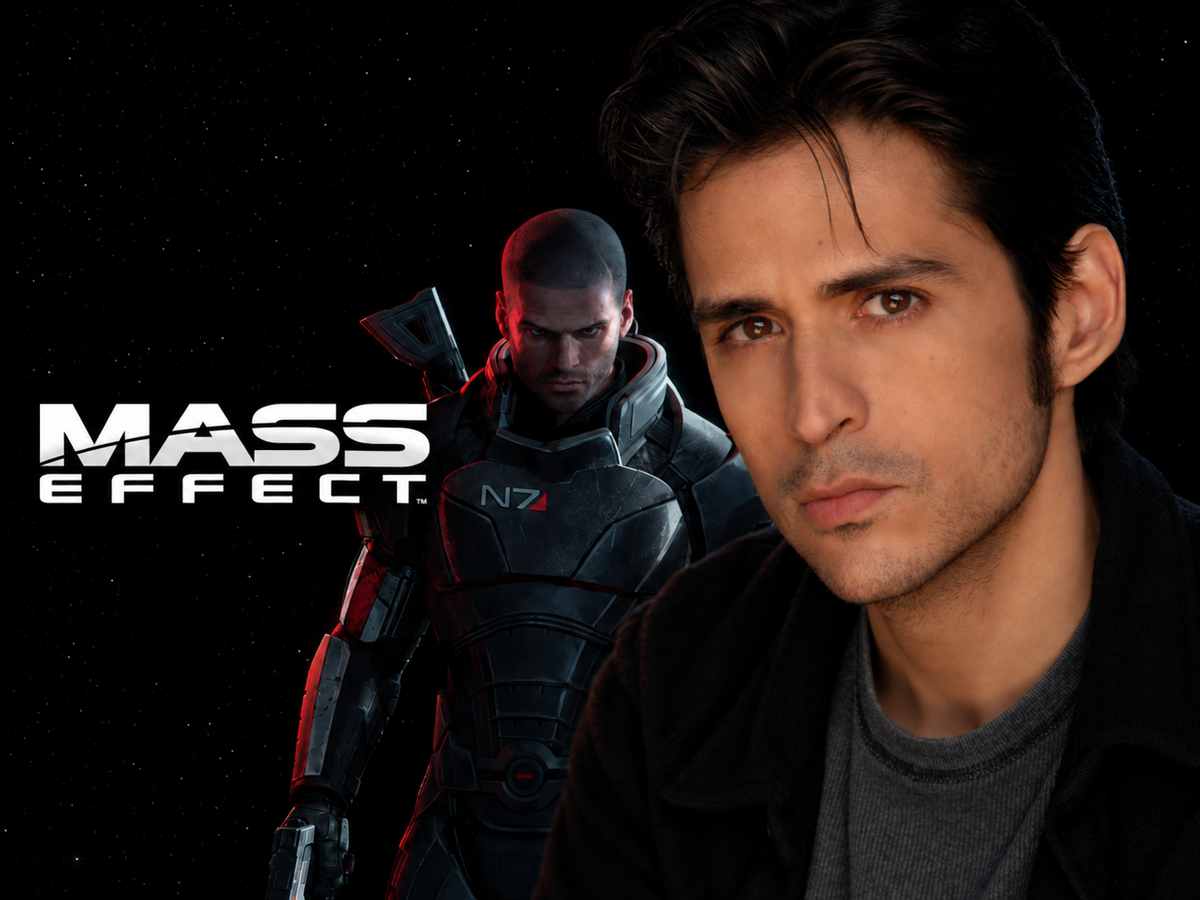
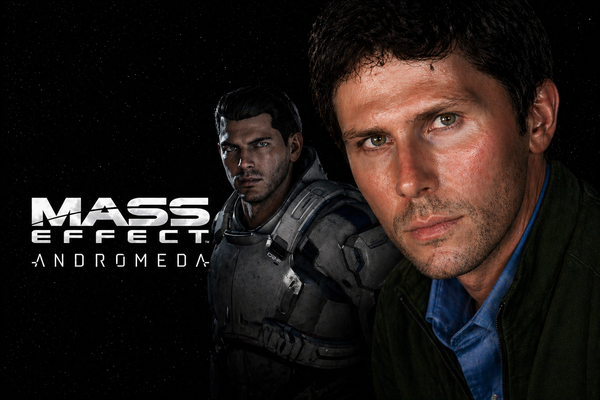
Today at We Are Mass Effect, we had the honor of interviewing Mark Meer, the iconic male voice behind Commander Shepard and several other beloved characters from the Mass Effect series. The interview was conducted via e-mail, allowing Mark to respond to the questions at his own pace and in his own words.
We would like to sincerely thank Mark for his kindness, generosity, and willingness to take the time to speak with us, sharing his experiences and reflections on Mass Effect, BioWare, and the future of the franchise.
“Like many, I was shocked and saddened to read it. My first thought was for everyone at BioWare - I certainly hope they’re all able to find new employment quickly.”
Mark Meer reflects on BioWare's shutdown.
WE ARE MASS EFFECT: To start, I’d love to ask a bit about your career and background as an actor. What first drew you to voice acting, and how has your journey been so far?
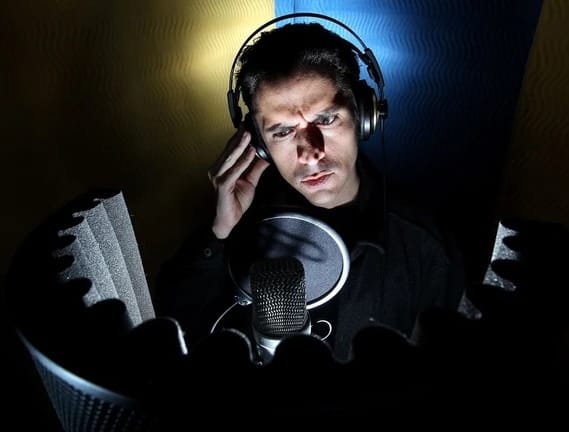
MARK MEER: The journey has definitely been a fun and rewarding one. As a kid, I started doing voices largely because of Dungeons & Dragons—as a Dungeon Master, you’ve got to provide voices and characters for everyone the players interact with, after all. I’ve always been a fan of animation, so long before I worked in the field, I was an admirer of voice artists like Mel Blanc and Thurl Ravenscroft, and later, Kevin Conroy and Mark Hamill. I’d done a fair bit of radio sketch comedy with CBC and some commercial voiceovers before my first work in video games, and had greatly enjoyed it… And all of said video game work originates from one audition for BioWare back in the late 90s—I landed the role of a cleric of Bhaal in Baldur’s Gate 2, and they just kept hiring me for pretty much all of their subsequent projects after that.
WaME: How familiar were you with the RPG genre before auditioning for Shepard? Did you have a sense of what you were walking into?
MM: I’ve been playing tabletop RPGs like Dungeons & Dragons, GURPS, and Call of Cthulhu since the early 1980s, so even before I ever played an actual computer RPG (I think my first one of those was probably The Bard’s Tale or Ultima IV), I was definitely very well-acquainted with the genre.
WaME: The audition process for a role like Shepard—a protagonist who is shaped physically and personality-wise by the player—must've been interesting. How did you approach auditioning for a character who doesn't have a fixed identity? How did you build a performance around a character who is different in every playthrough?
MM: As I recall, there were both Paragon and Renegade lines in the auditions and callbacks I did… As you mention, Commander Shepard’s appearance, background and personality are all determined by the player, but there’s definitely a core to Shepard that’s the same across all incarnations. At base, Shepard is a high-ranking, elite military officer who’s used to giving orders in high-stress situations. And ultimately, whether Paragon or Renegade, they’re still saving the galaxy - the Renegade just isn’t being very polite or empathetic about it.
WaME: Were there things you decided about Shepard privately that the scripts didn't give you?
MM: In my personal headcanon, Shepard had a series of adventures as a cadet, solving crimes with a talking Varren and a wisecracking Vorcha.
WaME: Commander Shepard has become one of gaming’s most enduring protagonists. What do you think made the character resonate so deeply with players?
MM: Well, the fact that Shepard was the very first fully-voiced player character in video games might have something to do with it… But Shepard also appeared in very well-written games set in a rich, fully realized universe with fantastic supporting characters. That all helps, obviously.
WaME: How do you see the voice acting industry today compared to when you recorded the original Mass Effect? What has changed, and what concerns you?
MM: When we recorded the first Mass Effect game, at the end of a working week, the pile in the recycling bin would be taller than the average Turian. By Mass Effect 2, we had changed to using tablets/iPads. I think the move from paper scripts has probably saved a few forests. These days, of course, everyone is concerned about what AI is going to do to the art of making games—I know that over the last few years, I personally have been alerted to multiple instances of someone using an AI clone of my voice… You try to ask them nicely to take them down, but it’s really like a game of Whack-A-Mole. Then, of course, there’s the recent situation with BioWare’s closure. A very sad turn of events—and certainly not unique in the industry over the last few years.
WaME: What would you want to say to the players who have been with Shepard, and with you, since 2007?
MM: You folks are great. Thanks for playing and for your tireless service to The Alliance. Hold the line.
WaME: Was there a particular scene or line in the trilogy that was especially difficult to perform, either emotionally or technically?
MM: Anderson’s death scene is the one that always comes to mind. Both Jennifer and I have talked in the past about coming to tears during that scene, and it’s no wonder—we both had Keith David’s fantastic performance in our headsets while we recorded our half of that scene. It was a real gift.
WaME: How different was it recording Paragon and Renegade dialogue for the same character? Did you ever prefer one version of Shepard over the other?
MM: You have to give them equal weight, of course… But let’s face it, the Renegade interrupts tend to be funnier.
WaME: Did you approach Shepard differently across the three games as the stakes became bigger and the character carried more trauma and responsibility?
MM: As we moved through the trilogy, we were given more leeway to show the emotional toll that the war against the Reapers was having on Shepard. The loss, the grief, the crushing weight of their responsibilities... By the third game, Shepard was more raw and emotionally worn down, certainly.
WaME: Were there moments where you disagreed with how Shepard was written or where you pushed for a different delivery?
MM: I knew better than to second-guess the writers, and as mentioned, there really isn’t one version of Commander Shepard, so who’s to say how Shepard would definitively react in a given situation? That said, I recorded in Edmonton, so I often had writers or even the head writer present for my sessions—they were always great about letting me change the order or syntax of a line if it was a bit of a mouthful, but we always had to track even minor adjustments to dialogue so that both Jennifer and I were saying the same thing. The same thing went if Jennifer recorded a particular scene before I did.
WaME: How much direction did you receive during recording, and how much freedom were you given to shape Shepard’s personality through performance?
MM: Our directors (in my case, Shauna Perry, Caroline Livingstone, and Susanne Hunka) were absolutely invaluable. The personality was different, of course, depending on whether we were doing a Renegade or Paragon pass, but as mentioned, there was a core that all versions of Shepard shared. I always felt free to shape my performance within those parameters, if that makes sense.
WaME: Did you ever record scenes without knowing the full context of what Shepard was reacting to? If so, how challenging was that?
MM: Our directors always gave us context and let us know where in the timeline of each game a given scene was taking place—that was particularly valuable since we weren't always recording chronologically. They took great care of us and never left us adrift. On occasion, for particularly action-heavy scenes, we might have a rough animatic to refer to. That let us know the dimensions of the environment, the relative position of other characters to Shepard, that sort of thing.
WaME: Which relationship or dynamic was the most interesting for you to perform: Anderson, Garrus, Liara, the Illusive Man, Joker, or someone else?
MM: The parental relationship with Anderson, the friendships and romances with the crew, and the antagonism between Shepard and the Illusive Man were all a joy to get to portray—please don’t make me choose! I did particularly enjoy the pivotal scene with Shepard, Blasto, and a Vorcha in the Citadel DLC, though.
WaME: Was there a specific moment when you realized that Mass Effect had become something much bigger than just another acting job?
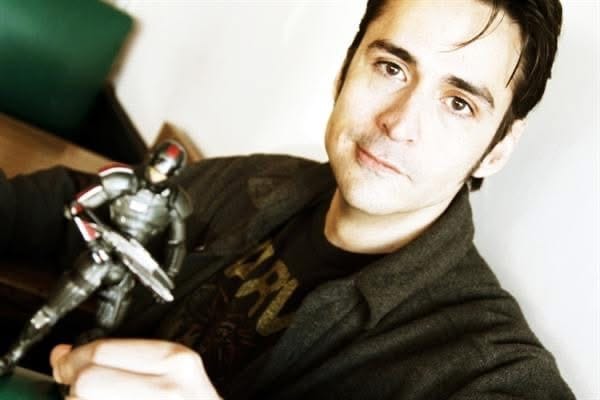
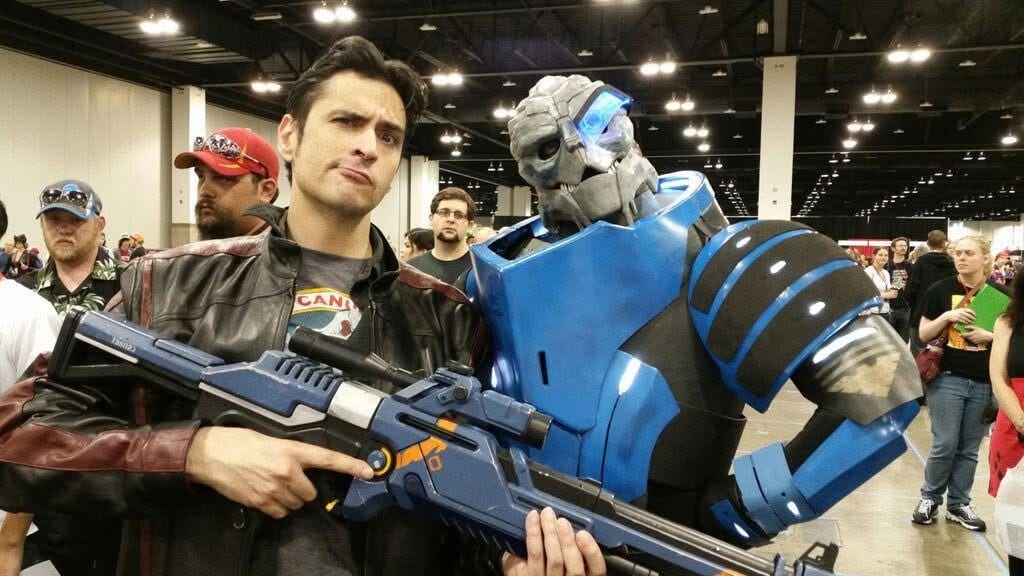
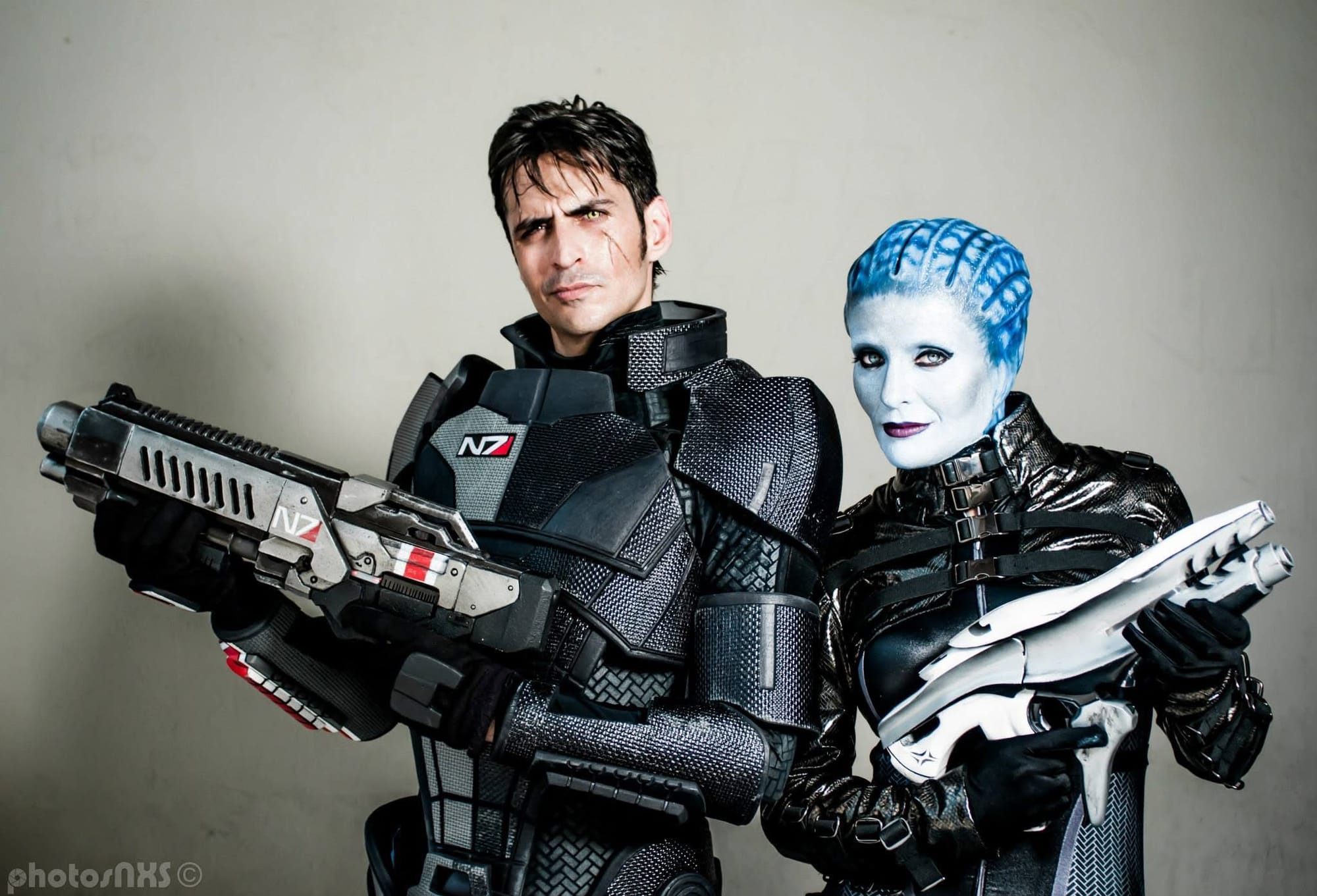
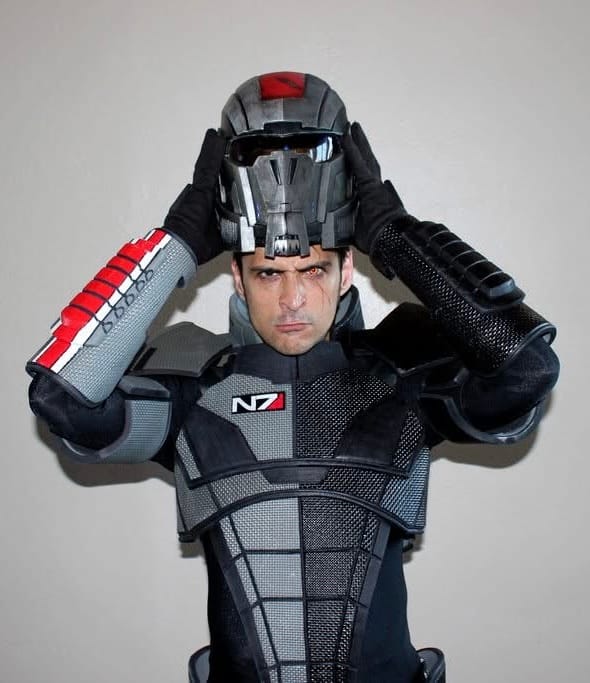
MM: Certain moments stand out—as a toy collector myself, getting my first Commander Shepard action figure was definitely one. But if I had to pick, I think the first time I walked by a cosplayer in a screen-worthy Commander Shepard costume (lights and all) at a convention cemented it for me. I immediately chased them down and introduced myself—I couldn’t resist. Since then, of course, I’ve seen innumerable amazing costumes, props, puppets, and more made with love by Mass Effect fans.
WaME: How has your relationship with Commander Shepard changed over the years? Do you see the character differently now than you did while recording the games?
MM: Hey, I owe that guy a lot, so my gratitude has grown and continues to. I suppose as the years have gone on, I've become more aware of just how much this character means to fans, which is a heady responsibility.
WaME: Do you have a favorite piece of Shepard dialogue that fans rarely bring up?
MM: “I’ll relinquish one bullet… Where do you want it?”
WaME: What is the strangest or most unexpected interaction you’ve had with a fan because of Shepard?
MM: I have signed several boobs. (All were male.) All kidding aside, Mass Effect fans are absolutely wonderful, and I greatly enjoy meeting them.
WaME: You’ve voiced characters beyond Shepard within the Mass Effect universe. Was it difficult to make those performances feel distinct when your voice is so strongly associated with the Commander?
MM: As I’ve often said in past interviews, Commander Shepard’s voice isn’t that far off from my own—my usual joke is that Shepard is just me trying to sound tough. The other voices I did in the trilogy (like Blasto, all of the Vorcha, Niftu Cal, the Hanar, etc.) were actually much more in the wheelhouse of the sort of work I’d previously done for BioWare: monsters, antagonists, and comic relief. And with them, I had a lot more latitude to use my accustomed techniques and approach, so when I got to do, say, some Blasto or Vorcha dialogue, it always felt like a fun little vacation at the end of the week from the responsibility of being the main character.
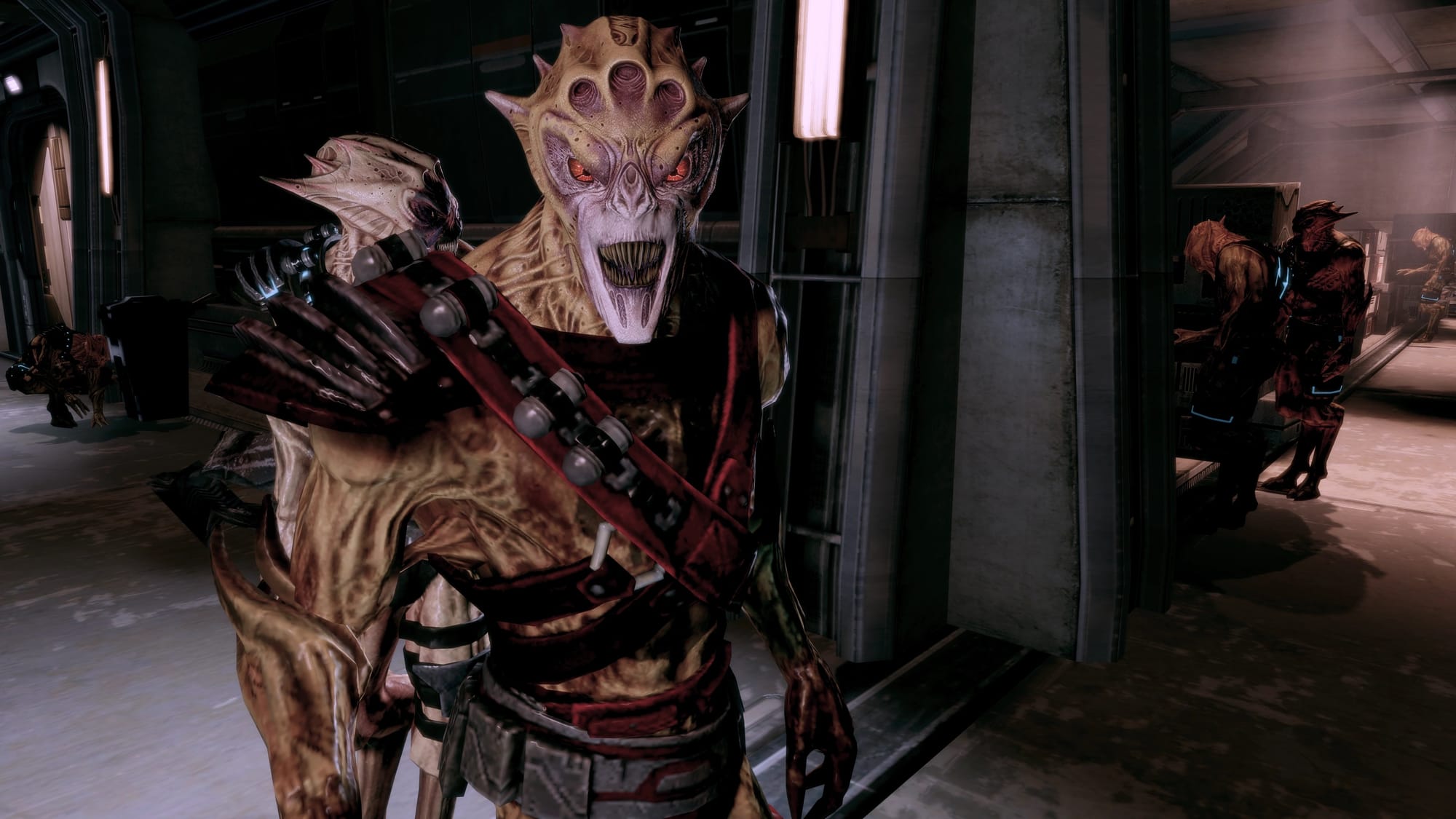
WaME: We've all heard the news about EA shutting down BioWare. What was your initial reaction, and how did you first hear about it?
MM: I first heard about it like everyone else, through BioWare’s social media posts on October 21st. Like many, I was shocked and saddened to read it. My first thought was for everyone at BioWare - I certainly hope they’re all able to find new employment quickly. It’s a very end sad for an incredibly-creative and influential company, one which meant so much to Edmonton, to Alberta, to Canada, and to the video gaming scene industry as a whole.
WaME: What would you like to say to the Mass Effect fans who are fighting to save the franchise through the #SaveMassEffect movement and the petition? Do you think they should still have hope for the future of the series?
MM: They have my support, and I absolutely wish them the very best. “Hold the line” seems appropriate… The petition is in its early days as I write this, but it seems to be gathering steam. If fans are hoping to see any future games set in the Mass Effect universe, then it probably helps for the current holders of the IP (and the general public) to see the strength of the Mass Effect fandom - and let’s face it, there’s strength in numbers.