Looking Back at Mass Effect’s Music — A Conversation with Sam Hulick

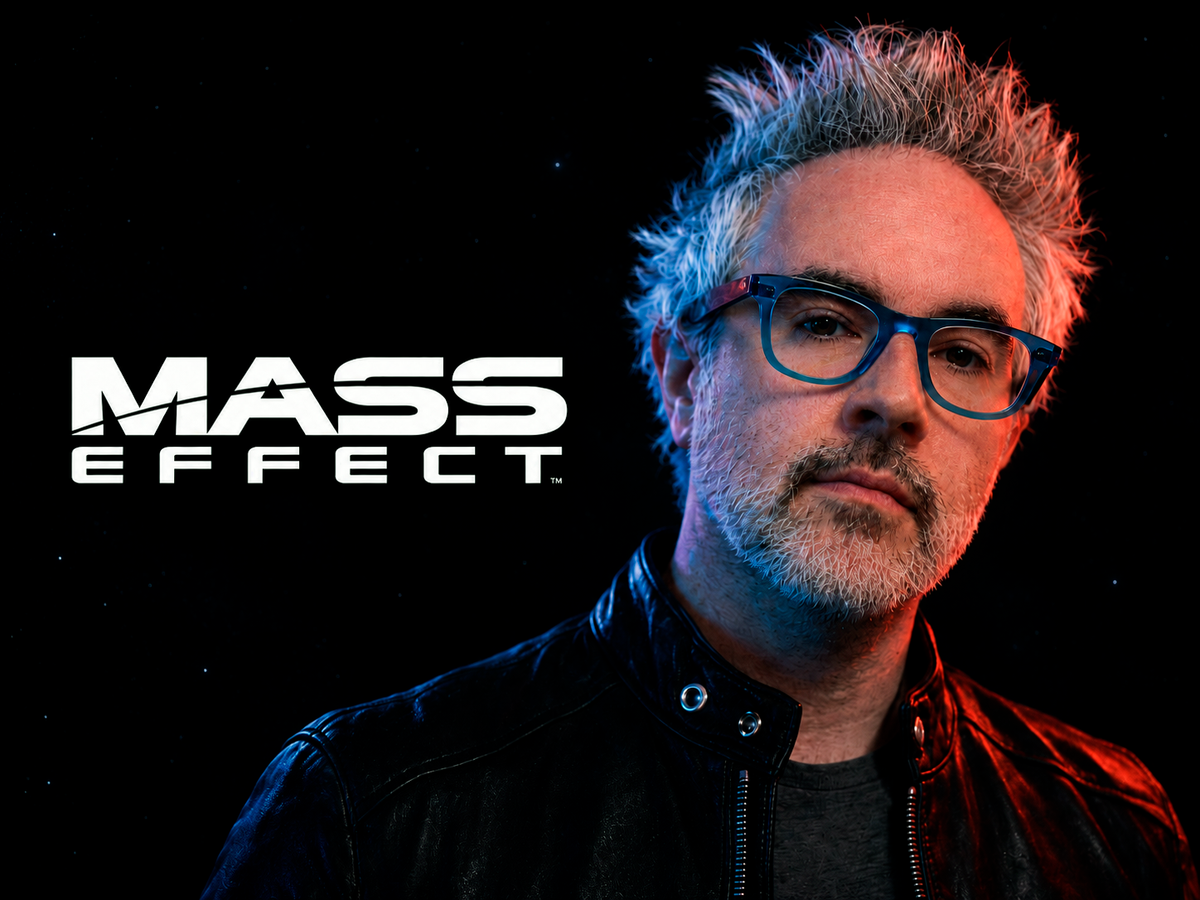
Today at We Are Mass Effect, we had the honor of interviewing Sam Hulick, the composer behind some of the most iconic music from the Mass Effect series. The interview was conducted via DM, allowing Sam to respond to the questions at his own pace and in his own words.
We would like to sincerely thank Sam for his kindness and willingness to engage with us from the very beginning, despite not knowing us beforehand.
Uncharted Worlds (Extended Version) releases tomorrow, October 2! Pre-save below.
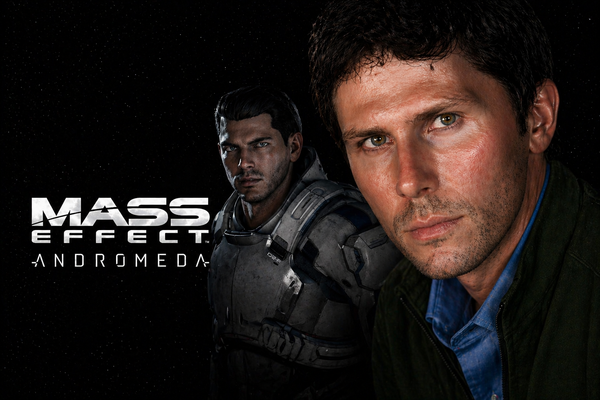
“Mass Effect: Andromeda was originally going to be scored by me and another composer, but there was a fair amount of staff turnover at BioWare/EA at the time, and it didn’t work out for us in the end.”
Sam Hulick Reflects on Andromeda
WE ARE MASS EFFECT: First of all, how are you doing, Sam?
SAM HULICK: I’m doing pretty well, thanks for asking! Keeping busy on multiple fronts and working on my next solo album.
WaME: To begin with, could you tell us a little bit about how you first got into composing music?
SH: My dad had always played in bands as long as I can remember, and even before I was born. Little fun fact: in the early 1970s, I think, his band played in a battle of the bands against a little-known group called the Jackson Five. You can guess who won!
Anyway, I obviously grew up in a very musical environment, and I’m sure that influenced the development of my ear for music. I eventually had ideas of my own and really wanted to get them out of my head, so in my early teen years, I started writing my own music on my Amiga computer, using MED, a music tracker.
Some time after that, my dad—much to my mom’s chagrin—put together a music studio in our living room, complete with a spinning disco ball hanging from the ceiling! Since I had access to such a wealth of gear, I moved from using trackers to an Ensoniq TS-12 workstation, which really opened up a much larger landscape of sounds to me. I did a lot of writing just for the sake of self-expression (I had a lot to get out), but eventually landed my first paid video game music project in 2003.
WaME: How do you see the current landscape for video game composers specifically? With changes in budgets, streaming platforms, social media, AI tools, and the way game soundtracks are consumed today, do you feel it is easier or harder for composers to build a sustainable career now compared to when you started?
SH: I see a lot of worry over AI-generated music, and some composers are concerned about being replaced. I personally don’t see it as an issue (at least with bespoke music), for a few reasons. One is that filmmakers and audio directors generally want to collaborate with creative human beings. People churning out AI imagery or music are focused on the end product because there’s no true creative process before arriving at the final result. A prompt is not creative. What about the journey between the idea and the finished music? That’s the exciting part that artists live for, and in my experience, directors really love seeing that process unfold as well. Music is more than half of the experience of any film or game, and they’re witnessing and guiding its creation. So, while I think people should keep their eye on AI developments, I wouldn’t lose sleep over it. Keep moving forward and don’t get distracted.
I think it’s important for composers early in their careers to find their unique voice, so they don’t come across as interchangeable with any other composer. I know it’s contradictory to say, on one hand, “Develop your voice,” but then follow up with, “You can’t rush it, it has to happen naturally, over time.” I think one’s musical voice develops from a combination of musical influences, projects you’ve worked on, your own life experiences, and, to some extent, an inner voice that often gets suppressed from early on because we’re too busy trying to emulate our influences, follow what’s popular, or we’re negatively judging our own raw instincts. I think some composers forget to just sit down between projects and write music for the sake of art and expressing oneself. Write more of that, and get it out into the world! For all you know, someone might discover your solo works and want to hire you based on that, because it sounds fresh and unique. Kyle Dixon and Michael Stein are a great example of this, actually. They’re part of an electronic music band called SURVIVE that got together in 2009. The Duffer Brothers were familiar with their music and used one of their pieces in a proof of concept to pitch Stranger Things to Netflix. Obviously, that went very well, and Dixon and Stein were hired to score the entire series. That kind of thing happens a lot more than people think. The entire world is connected, for better or for worse, so take advantage of that!
The one thing I’d want to convey most to today’s composers is that you should be business- and marketing-savvy, because an entrepreneurial mindset is especially important for making it in today’s industry. Build an online presence, follow social media trends that actually increase your visibility, and understand how your music gets discovered and consumed. Talent is important, but the composers who treat their careers like a business without losing sight of the art will have a leg up.
WaME: Beyond Mass Effect, you’ve worked on projects such as Red Orchestra, A Way Out, Baldur’s Gate, and others. How different are the creative dynamics from one project to another?
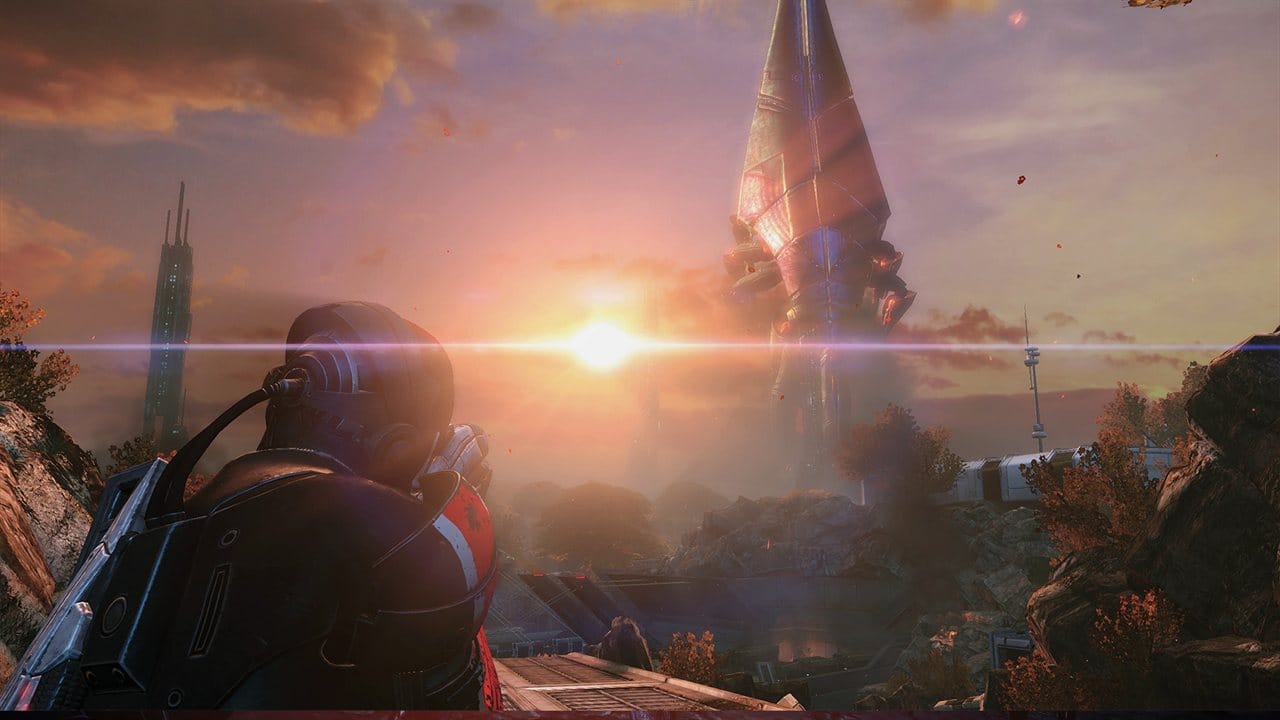
SH: Oh, totally different. Every project is different, as is every team. Mass Effect, being absolutely massive in scale, included in its reference materials a PDF covering every aspect of the world: alien races, planets, events, companies, weapons, ships, and more. Siege of Dragonspear’s story outline was no slouch either, weighing in at 52 pages! In the film/TV world, it would be called a film or series “bible.” Some games won’t have quite that level of detail. Sometimes a composer is brought on very early, and in those cases, there might be less visual material to work with.
The team dynamic is always different, too. On some projects, there might be a lot of revisions, but that doesn’t mean they don’t like your work. It usually just means you haven’t settled on the same page with that client yet and developed a shorthand between the two of you.
Other clients, for whatever reason, are just on board with you from the very start. I’ve had projects like that, too, where almost everything I send in gets a “no notes” in response. It’s incredibly gratifying, but important to stay grounded and not expect that with every gig!
WaME: Video game music has to react to the player in ways that film music doesn’t. How much did interactivity affect your writing for Mass Effect?
SH: The demands on my end weren’t too intense, because BioWare had a full audio team to handle ensuring the music was seamlessly interactive. I would deliver pieces of music as stems (groups of tracks), and the interactivity system (called audio middleware) would activate different stems based on what was happening in the game. Stems were often broken out into low/medium/high intensity, especially for combat tracks, with intros and outros delivered as separate parts so that the middle section could loop. It’s super important to sync up with the audio team before you start writing, so they know how they plan to implement the music, and then you’ll avoid boxing yourself into a corner when you’re writing.
WaME: Who would you say are your main musical influences or references? And specifically for Mass Effect, were there any particular sounds, composers, films, games, or musical traditions you looked to when shaping its identity?
SH: My influences are a bit all over the place! Going back to my late teens and early 20s, I was into Yanni, Depeche Mode, Danny Elfman, and Ray Lynch (especially his album No Blue Thing). Those influences shaped my initial music explorations as I was finding my footing. Ray Lynch is probably one of the earliest examples I can think of where the fusion of acoustic instruments with synthesizers really stood out to me.
With many games/films, the project directors often have musical references in mind, and Casey Hudson and the audio team had a pretty clear musical vision from the very start. For Mass Effect, the references were Tangerine Dream, Vangelis, and Jerry Goldsmith’s work on the Star Trek movies, and that was pretty much locked in by the time I came on board. Of course, you're hopefully never just copying those sources verbatim, but rather, taking aspects that appeal to you and shaping them into a unique score.
WaME: One of the most fascinating things about Mass Effect’s score is how it blends orchestral writing with electronic textures. How did you approach that balance?
SH: When I was discussing music direction with Casey and the audio department, they had this idea of placing the synthesizers in the same acoustic space as the orchestra. I think that was kind of a unique approach at the time, at least in game scores. Obviously, that sound evolved over the first three games.
I don’t know if I can elaborate on any kind of formula I used to determine when synth was used vs orchestral, or how the two balanced out each other. I just felt it out on a case-by-case basis. For instance, the cutscene where Sovereign is flying toward the Citadel, smashing through the Alliance fleet, there’s music underneath that’s kind of Jerry Goldsmith-esque, but the cinematic switches to this awesome distant shot of Sovereign landing on the Citadel Tower, and the music changes to a synth arpeggio on that cut. That scene with the music still gives me chills!
WaME: There are two specific themes that have always caught my attention from a composition standpoint: “Uncharted Worlds” and the “Mass Effect Theme.” Starting with “Uncharted Worlds,” I’d love to know how you found this way of making the player feel that they are about to explore the galaxy. In my opinion, it is one of the themes that best reflects, emotionally speaking, that feeling of adventure, of stepping into the unknown...
SH: I think there’s a sort of duality at play. The various rhythmic elements give a sense of propulsion, of moving forward, and on top of that, there’s a solo flute playing longer, sustained lines. The two balance each other out, so the piece can either feel like you’re headed to your next adventure, or you’re just cruising somewhere to explore.
But the funny part is, “Uncharted Worlds” wasn’t even written with the intention of being the galaxy map piece! That was my pitch piece to get hired to work on Mass Effect. At the time, the reference I was given was “Love on a Real Train” from the Risky Business score. The team at BioWare liked the rhythmic, multi-textural sound of that track and asked me to use it as inspiration. I produced my demo piece, sent it in, and that track ultimately got me hired.
Some time after I was already working on the project, I was asked to write music for the galaxy map. I took a stab at a draft and turned it in, but it didn’t really land. It had a sense of urgency to it that would’ve worked great if you were always off to some intense mission. I don’t remember how much later it was decided, but someone on the team essentially told me, “Oh, by the way, we’re using that one early piece you wrote for the galaxy map.” And actually, it fit really well! If I could go back in time as a more seasoned composer, I probably would’ve responded, “That’s great, but since it was a demo piece, and players can spend a fair amount of time navigating the map, why don’t I make it longer?” My only regret is how short the piece is, but apparently it doesn’t detract from its impact on fans over the years.
WaME: Regarding the Mass Effect Theme, I’ve always wondered how a composer receives feedback and direction when composing the main theme of a work — a theme that has to become the symbol and banner of everything a franchise like Mass Effect is meant to be. You practically create a musical language that ends up becoming part of the identity of the saga. Of course, when it was composed, no one knew the journey it would eventually have, but even so, in its energy it reminds me of those instantly recognizable themes like Game of Thrones, Star Wars, and others. Maybe it isn’t as “hummable” as those because of the composition and the instruments, but it is one of those themes where, as soon as it starts playing, you know you are listening to Mass Effect.
SH: Main themes can be a lot of pressure, and this one in particular was the result of a lot of back-and-forth. In the end, it took me about nine revisions to nail it. The initial drafts may not land, but oftentimes there’s an idea that ignites a spark, and we keep shaping it from there. Sometimes I’ll sketch out thematic ideas on piano, because if a theme doesn’t work in its most basic form, it likely won’t be memorable. I don’t share that piano sketch with my client, though. It’s just for my own musical scratchpad of ideas that I refer to before I fully orchestrate/produce something and send it off for feedback.
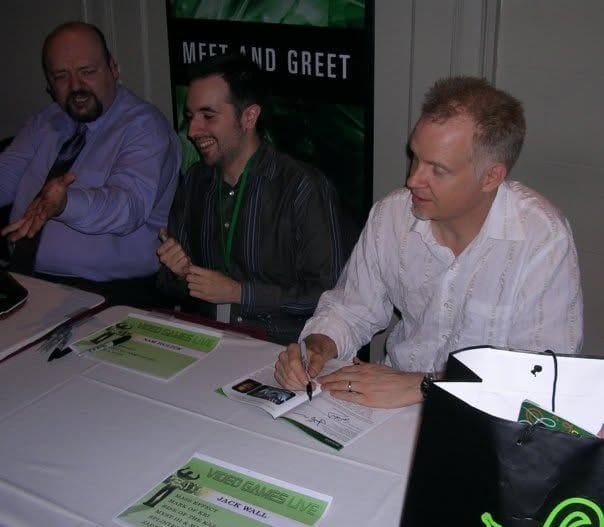
WaME: During Mass Effect 1, you and Jack Wall composed the game together and, if I’m not mistaken, you both composed tracks such as “The End.” However, both of you also have many individual tracks. In those cases, were you also collaborating and giving each other feedback, or did each of you receive your own direction and then come together to compose certain tracks?
SH: On Mass Effect 1, every composer worked in their own silo, receiving direction from BioWare directly and sending tracks to BioWare for feedback/approval.
This is actually something that trips up a lot of people. When credits list multiple writers, it doesn’t necessarily mean they worked directly together on that track. It just means that themes or melodies in that track belong to multiple composers. “An End Once and For All,” for example, uses themes that I wrote, and was orchestrated and produced entirely by me. It’s co-credited, though, because it references Clint Mansell’s “Leaving Earth.”
WaME: I remember that a few years ago you uploaded a demo of a track for Andromeda, but in the end you weren’t chosen to compose the game. Was there a casting process for composers, or did you send the demo on your own?
SH: Yes, there is usually an audition process for games. The studio will typically narrow it down to a few composers whose work they like and ask them to create spec (speculative) demos, meaning the composer writes custom pieces of music for the game. The team listens to the submitted demos, and sometimes there might be a second round of demoing, but usually they know after the first submission.
I was invited to pitch, and at first, I thought, “Isn’t my music from the first three Mass Effect games the pitch?” It’s funny looking back at that moment now, because I see it as naive. The current version of myself would’ve been excited at the prospect of pitching for something I’d already worked on, because it’s a chance to try something new and demonstrate how I’ve grown as a composer since the last project.
Incidentally, Mass Effect: Andromeda was originally going to be scored by me and another composer, but there was a fair amount of staff turnover at BioWare/EA at the time, and it didn’t work out for us in the end. These things happen in the music business all the time, and can be incredibly painful, but it’s important to dust yourself off and carry on. Dwelling on lost gigs isn’t healthy or productive.
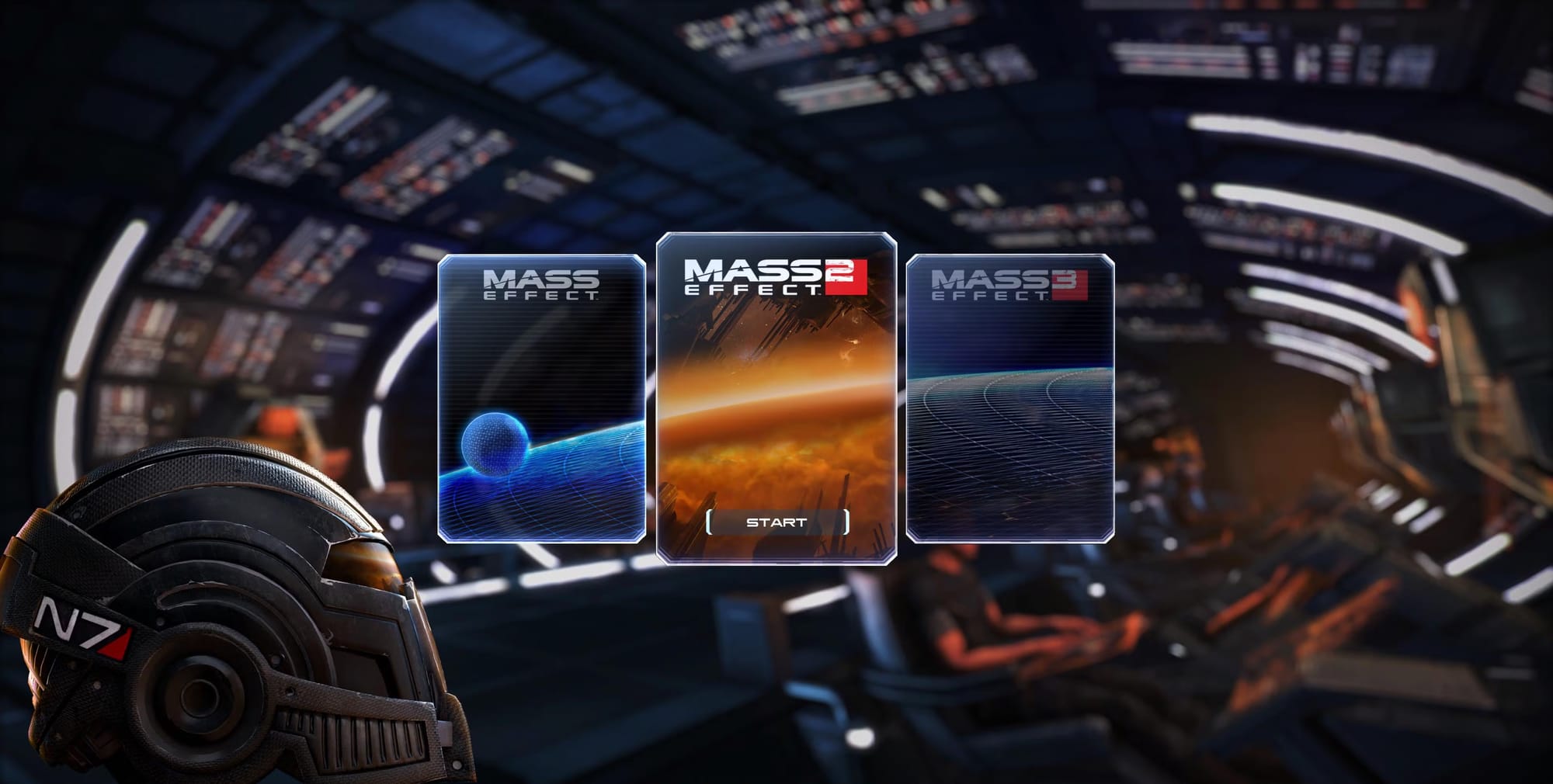
WaME: You are technically the composer of the most recent theme in the saga, “Resynthesis,” for the Legendary Edition. What was the process of creating it like, and what direction were you given for this track? I understand the title comes from the fact that it is the exclusive theme for Mass Effect Legendary Edition and from the idea that the game is being “remade.”
SH: I had such a blast working on that piece! In early 2020, the audio director, Eric Vervaet, reached out to me to ask about a piece of music in the BioWare archives that had apparently gone unused. Neither of us was sure if BioWare had the rights to use it, so I did a bit of digging and found that I still owned it. They wanted to use this piece as the main menu music for the launcher, where you pick between Mass Effect 1, 2, or 3. This particular piece was probably around thirteen years old, and it didn’t really live up to my current standards in terms of production quality, so I remixed and remastered it. It was great to have the chance to breathe new life into that track!
By the way, the title actually has a dual meaning! You’re right that it refers to the “remake” of the Mass Effect trilogy, but it’s also a reference to my favorite Mass Effect 3 ending.
WaME: I know you probably can’t say much, but would you like to compose for the saga again in Mass Effect 5? What expectations do you have for the game?
SH: It would be an incredible feeling to return to the world of Mass Effect! I can’t say I have any particular expectations. I’m one of those people who almost hates to even watch trailers for movies or games, just because I don’t want to go into something with preconceived notions about what it’s gonna be or how I’m going to react to it. I like to be surprised, and I think the team at BioWare is going to do a killer job.
WaME: In the scenario where you were to compose for Mass Effect 5, would you like to try any kind of different tools or instruments to expand the musical language of the saga?
SH: One hundred percent—but carefully. I think one of the biggest challenges with the Mass Effect franchise is that it has such a rich musical legacy, so how do you do it proper justice? How does one balance what the fans like most about the music from the past games with where the game needs to go to evolve? If I were to work on ME5, I would probably want to push boundaries as much as I can. “More of the same” is not exciting.
WaME: Just like with the ME5 question, I assume you can’t talk much about this, but we’ve seen you interact a few times with Daniel Casey, writer and executive producer of the Amazon Mass Effect series. Is there a possibility that you will compose for the series?
SH: Of course, I'd be thrilled to work on the series! I think it would be really special to have the sonic identity of the TV show's score feel like that of the trilogy. Fans really appreciate musical continuity between games and their adaptations, like with The Last of Us and Silent Hill. Whether there’s a possibility I’d be involved...well, let’s just say I’m an optimist at heart.
WaME: Is there a Mass Effect track of yours that you feel especially proud of, or one that perhaps means more to you now than it did at the time?
SH: Man, there are so many, it’s difficult to pick just one! For me, the tracks I wrote for Mars on Mass Effect 3 are pretty special. There’s a lot I don’t remember specifics about because it’s going back so many years now, but I distinctly remember talking to Rob Blake, the audio director on ME3, and Rob essentially said, “People really love that ME1 sound, how can we harken back to that?” Mars was my answer to that question.
Of all three games in the trilogy, I’m most proud of my work on the third game. Additionally, all my music was mixed by scoring mixer John Rodd (Star Wars: The Acolyte, The Outer Worlds, Overwatch, Nope, Get Out), so those Mars tracks really sound fantastic, and in the Mars combat piece, you can hear all the individual synth tracks occupying their own space. It’s such a great mix.
WaME: Space in Mass Effect doesn’t feel empty; it feels ancient, mysterious, and full of memory. How do you compose music for something as abstract as the feeling of space?
SH: I love this question. The music itself handles conveying a sense of mystery and the possibilities of what lies in the depths of space. But it’s the use of effects like reverb and delay that really communicates the empty spaces in between everything else. In layperson’s terms: reverb is the huge, spacious sound of you yelling into a canyon, and delay is your voice echoing, “HELLO...hello...(hello)” back to you.
I like to lean into musical sparseness for space, because when the notes themselves have space between them, reverb and other effects stand out to create depth. When I’m writing for Mass Effect, I’m always thinking in terms of not just the music, but the 3D environment that music sits in. It’s one of the several sonic ingredients in my Mass Effect “recipe,” so to speak.
WaME: Thank you so much, Sam, for your time and answers. It has been a real pleasure to be able to talk with you and have you grant us this interview.
SH: It was my pleasure!
Pre-save Uncharted Worlds (Extended Version) now ahead of its release tomorrow, October 2, 2026: https://link.samhulick.com/uncharted-worlds